No products in the cart.

Vintage rugs are everywhere right now. You see them in magazines, on home makeover shows and all over social media. Their soft, faded colors and worn-in look make a room feel warm and lived-in.
But when you start shopping, the words get confusing. Is it vintage? Antique? Semi-antique? “Vintage-style”? And does it even matter?
It does, especially when it comes to price. Here’s a simple guide to what these words really mean, so you know exactly what you’re buying.
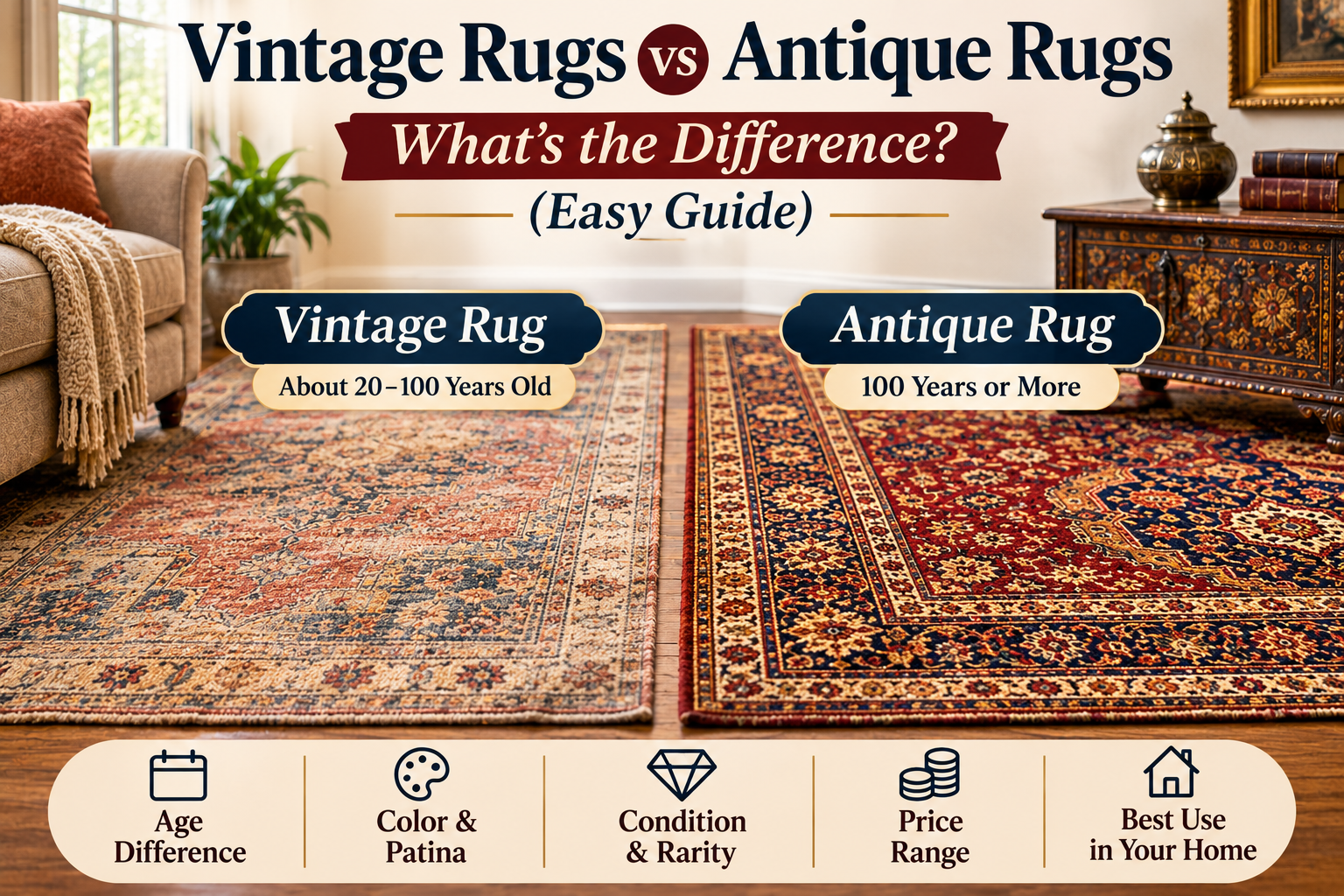
There’s no official rulebook, but in the rug world, vintage rugs are usually somewhere between about 20 and 100 years old.
Many dealers break this down a little further:
These rugs have been used and loved. They often have softer colors and a slightly worn surface that only comes with time.
An antique is usually defined as something that’s at least 100 years old. Most rug dealers use the same rule. So antique rugs are generally rugs made more than a century ago.
Because they’re older and harder to find, antique rugs in good condition are usually the most expensive. Some are even collected like works of art.
| Vintage | Antique | |
|---|---|---|
| Usual age | About 20 to 100 years | 100 years or more |
| Colors | Soft, often a little faded | Often very mellow and rich |
| Condition | Light to medium wear | Can range from great to fragile |
| How easy to find | Fairly easy | Harder to find |
| Price | Mid-range to high | Usually highest |
| Best for | Everyday living rooms and bedrooms | Collectors, or lighter-use rooms |
Here’s something many shoppers don’t know. A lot of rugs sold as “vintage” are actually brand new.
They’re made to look old. Some are washed with strong chemicals to fade the colors. Others have the pile shaved down very low so they look worn. Some are even dyed over in a single bright color.
There’s nothing wrong with a vintage-style rug if that’s the look you want. Just make sure you’re paying a vintage-style price, not a true vintage or antique price.
You don’t need to be an expert. Here are a few easy clues:
Not every old rug is valuable. Here’s what usually matters most:
Choose vintage rugs if:
Choose antique rugs if:
Prefer something new? A new hand-knotted rug in a traditional design can give you a classic look and decades of life ahead of it. Many of our traditional designs, like Oushak and Ziegler Mahal, have the same timeless feel. Take a look at our traditional rug collection.
Older rugs have already lasted a long time, and with the right care, they’ll keep going:
When your rug needs a deep clean or repair, our team offers professional rug cleaning and repair for handmade, vintage and oriental rugs.
Jacobsen Oriental Rugs has been helping families choose and care for rugs for over 100 years. You can read our story on our About Us page, browse our full collection or check our rug FAQs.
Have an old rug and not sure what it is or how to care for it? Bring it to our Syracuse or Saratoga Springs showroom, or contact us. We’re always happy to take a look.
Vintage rugs are usually about 20 to 100 years old. Antique rugs are usually 100 years old or more.
It’s a rug that’s roughly 50 to 100 years old. It sits between vintage and antique.
Good-quality vintage rugs in good condition often hold their value well. But a rug’s condition, quality and origin matter more than age alone.
Look for uneven, natural wear, gently faded colors and signs of hand knotting on the back. Very even fading or wear can mean a new rug made to look old.
Yes. Many vintage rugs are hand knotted and very tough. Use a rug pad, turn it regularly and have it cleaned by a professional when needed.


Leave a comment